AI-Driven Neutrosophic Cosine Similarity Framework for Evaluating University Students’ Innovation Ability Management
Article Sidebar
Main Article Content
Abstract
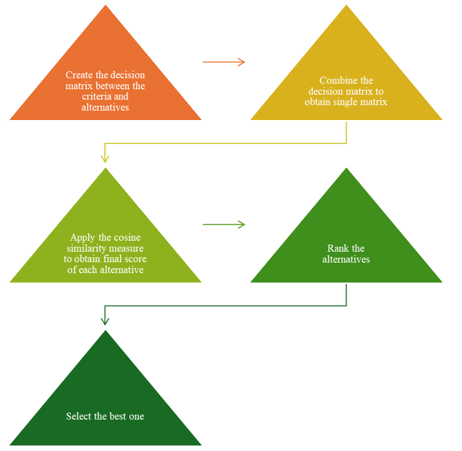
The quick development of artificial intelligence (AI) opens new possibilities for enhancing the assessment and administration of college students' capacity for creativity. The objectivity and comprehensiveness of traditional evaluation methods are limited by their frequent reliance on subjective assessments and disjointed indications. This study integrates data-driven analytics, intelligent decision support, and multi-criteria assessment to present an AI-driven framework for evaluating university students' effectiveness in managing their innovative abilities. Creativity, problem-solving abilities, technology use, collaboration, entrepreneurial spirit, and flexibility are important evaluating factors. This study proposes a neutrosophic methodology to deal with uncertainty information. We compare the proposed results by other functions. Multidimensional student data is gathered, processed, and analyzed using AI techniques including machine learning, data mining, and natural language processing, guaranteeing accuracy and equity in the evaluation procedure. The results show that AI-based evaluation improves transparency, lessens bias, and makes it possible to track students' innovation progress in real time. To create an atmosphere that methodically develops innovative ability in higher education, the framework also helps teachers recognize their strengths, shortcomings, and developmental paths.
Downloads
Article Details

This work is licensed under a Creative Commons Attribution 4.0 International License.
How to Cite