
Enhanced Machine Learning Approach for Predicting Students' Academic Performance and Study Strategies
Article Sidebar
Main Article Content
Abstract
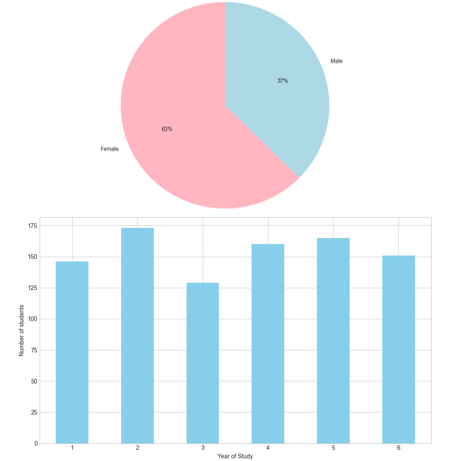
We build upon our previous work in exploring machine learning methods to predict students' educational outcomes and learning habits towards tertiary education. In this paper, we employed five supervised ML models: Random Forest, KNN, Decision Tree, Linear/Logistic Regression, SVM, and improved their performance through extra feature engineering and hyperparameter tuning, and ensemble techniques. Our data set comprised motivational characteristics of 924 university students such as intrinsic/extrinsic motivation, self-determination (autonomy, competence, relatedness), self-esteem, and demographic information. The self-reported models contributed: The Random Forest classifier assisted with the strategy prediction in achieving accuracy of 96.8% (over 94.9% baseline accuracy improvement), and the optimized Decision Tree regressor enhanced the MAE on academic performance prediction to 0.352 (over 0.378 baseline). The models also facilitated reasoning about motivation boundary feature of boundaries and mediating psychologists need gratification, which was illustrated with strong tamper-proof verification. These adaptive learning systems seek to optimize learning through response to students' motivational feedback systems.
Downloads
Article Details

This work is licensed under a Creative Commons Attribution 4.0 International License.
How to Cite