Catalyst: A Human-Supervised AI Framework for End-to-End Handwritten Assessment and Personalized Learning Support
Article Sidebar
Main Article Content
Abstract
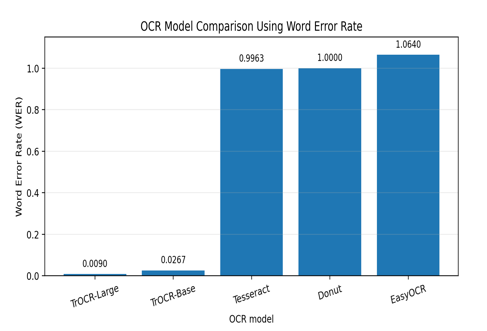
Artificial-intelligence applications in education are increasingly expected to support assessment, feedback, and learning analytics, yet many prototypes evaluate a single model without showing how it can be embedded in a coherent educational workflow. This paper presents Catalyst, an integrated educational platform that connects handwritten-answer processing, assessment management, teacher verification, learner feedback, and performance-oriented support within a modular client-server architecture. The system uses a Flutter mobile client, a Spring Boot backend, PostgreSQL persistence, a two-stage document-processing pipeline that combines Differentiable Binarization-based text detection with TrOCR recognition, and a T5-based text-to-text service for content summarization and explanation. The principal technical evaluation focuses on handwriting recognition because it provides an objective, ground-truth-based measure. Word Error Rate (WER) is used throughout without converting WER into an artificial “accuracy” score. The reported evaluation yields WER = 0.0090 for single-line handwriting and WER = 0.1925 for multi-line document processing, showing that layout analysis and line extraction are the dominant sources of degradation at page level. In the recorded model comparison, TrOCR-Large and TrOCR-Base produced substantially lower WER than Tesseract, EasyOCR, and Donut under the project evaluation configuration. Beyond model performance, Catalyst separates machine transcription from final academic authorization: objective items may be scored automatically, whereas written responses remain teacher-verifiable before publication. The resulting contribution is an end-to-end, human-supervised architecture that links document AI to actionable educational workflows rather than treating recognition, grading, analytics, and learning support as disconnected functions.
Downloads
Article Details

This work is licensed under a Creative Commons Attribution 4.0 International License.
How to Cite