
Significant Differences Between Neutrosophic Sets and Fermatean Neutrosophic Sets
Article Sidebar
Main Article Content
Abstract
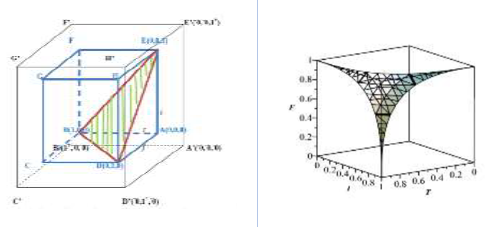
In contemporary data analysis and decision-making, managing ambiguity, imprecision, and uncertainty is essential. Advanced frameworks like neutrosophic sets and Fermatean neutrosophic sets were created to tackle these issues. By adding three distinct membership functions to express truth, indeterminacy, and falsity, neutrosophic sets expand fuzzy set theory and provide a thorough method for handling inconsistent and incomplete data. On the other hand, Fermatean neutrosophic sets offer a more flexible and nuanced depiction of uncertainty by adding a cubic sum constraint on the membership degrees. This paper analyses the theoretical underpinnings of both sets, contrasts their strengths and weaknesses and structures, and employs real-world examples to illustrate how they might be used in actuality. While Fermatean neutrosophic sets are used in project management, autonomous vehicle navigation, and financial investment decisions, neutrosophic sets have been tested in medical diagnosis, sentiment analysis, and environmental risk monitoring. By emphasising each framework's advantages and appropriateness for various decision-making scenarios, the comparison analysis sheds light on how advantageous they are in real-world circumstances involving complicated unpredictability.
Downloads
Article Details

This work is licensed under a Creative Commons Attribution 4.0 International License.
How to Cite